Facing severe dental discomfort or a compromised tooth often leads to a crucial decision: should you save the tooth with endodontic treatment or remove it entirely? Preserving your natural tooth through endodontic therapy is almost always the superior choice for maintaining bite alignment, preventing jawbone resorption, and safeguarding overall oral health. While removing a tooth might seem like a quick fix, losing natural tooth structure alters your oral biomechanics and often necessitates complex restorative care down the road.
When dental pain interrupts your daily routine, whether you are returning from a round at Hillcrest Golf Club or finishing lunch near R.H. Johnson Boulevard, making an informed choice about your dental care is essential. At Sunridge Dental Care, our proficient team, Dr. Amy Okun, Dr. William F. Gioia, and Dr. Cynthia Colson, is dedicated to providing compassionate, precise endodontic and surgical solutions tailored to your unique anatomical needs.
What Is Root Canal Treatment and How Does It Work?
Our root canal therapy in Sun City West is a restorative procedure that removes infected pulp tissue from inside a tooth while leaving its natural root structure intact. By thoroughly cleaning, disinfecting, and sealing the inner root canals, this treatment stops infection without requiring extraction. It allows you to preserve your natural bite and avoid complex tooth replacement procedures.
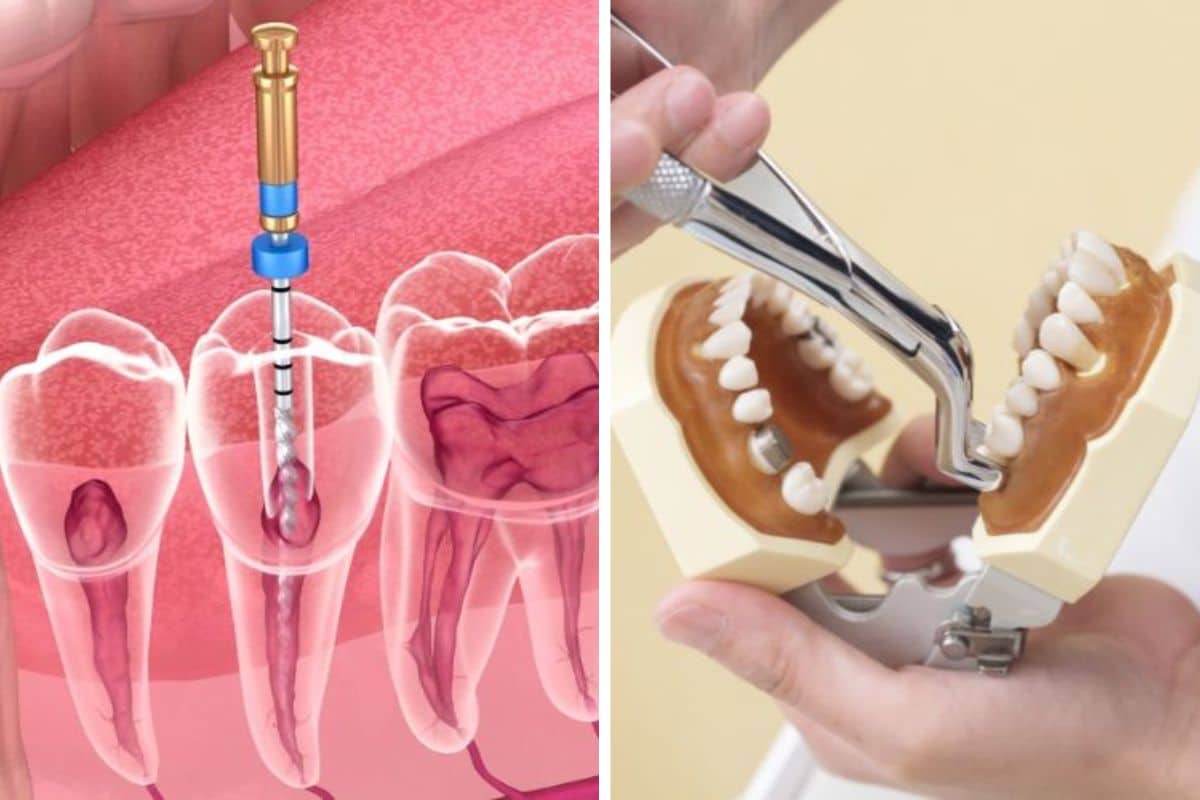
When deep decay, structural cracks, or trauma reach the central pulp chamber, bacteria trigger an inflammatory response that causes localized pressure and discomfort. According to data from the Centers for Disease Control and Prevention (CDC), over 25% of U.S. adults have untreated dental caries, which can progress directly into pulpitis if left unchecked. During endodontic treatment, local anesthesia ensures complete comfort while the diseased nerve tissue is removed. The emptied chamber is disinfected, filled with a biocompatible material called gutta-percha, and sealed. In most cases, a custom dental crown is placed afterward to restore full structural integrity and protect against future fracture.
Understanding Tooth Extraction: Process and Anatomical Impact
Tooth extraction is the complete surgical or simple removal of a tooth from its alveolar bone socket. It is typically reserved for teeth that are damaged beyond functional repair due to severe fracture, extensive bone loss, or non-restorable decay. While removing the tooth eliminates the immediate infection, it leaves an empty space that significantly alters jaw structure over time.
When a tooth is removed, the surrounding jawbone loses the mechanical stimulation provided by natural chewing forces. Without this stimulation, the alveolar ridge undergoes progressive bone resorption (loss of bone density and height). Surrounding teeth gradually shift into the empty space, altering your bite alignment (occlusion) and leading to secondary issues such as temporomandibular joint (TMJ) strain or difficulty chewing staple foods like Southwest roasted corn or crisp Sonoran greens. To prevent these complications, extractions usually require follow-up treatments such as dental implants, dental bridges, or partial dentures.
Comparing Your Options: Clinical Outcomes at a Glance
Choosing between saving a natural tooth and extracting it involves evaluating long-term health, functionality, and recovery.
| Clinical Factor | Root Canal Treatment | Tooth Extraction |
|---|---|---|
| Natural Tooth Preserved | Yes, retains original root and bone | No, tooth and root are completely removed |
| Jawbone Health | Preserves natural bone density through chewing force | Causes gradual bone resorption without an implant |
| Bite Stability | Keeps adjacent teeth firmly in position | Adjacent teeth can tilt, drift, or over-erupt |
| Recovery Time | Usually 1 to 2 days with minimal discomfort | Requires 7 to 14 days for soft tissue and socket healing |
| Follow-Up Needs | Typically requires a restorative dental crown | Requires a dental implant, bridge, or partial denture |
Why Saving Your Natural Tooth Is Better for Your Oral Health
Preserving your natural tooth is the gold standard in dentistry because no artificial replacement fully replicates the biomechanics, sensory feedback, and bone preservation of a natural root. The periodontal ligament surrounding a natural root acts as a built-in shock absorber, allowing you to gauge bite pressure accurately while chewing.
Opting for gentler, restorative treatments whenever possible ensures long-term comfort, especially for active residents who enjoy dining out near Sundome Plaza or taking long morning walks along Beardsley Park. Furthermore, keeping your natural tooth avoids the domino effect of tooth loss. When you choose our modern root canal therapy in Sun City West, you maintain your natural facial structure, preserve neighboring teeth, and eliminate the infection at its source.
When considering tooth restoration, access to expert endodontic care makes a significant difference in long-term outcomes. Receiving specialized RCT allows patients to maintain full oral functionality without undergoing extensive surgical extractions. Through precise diagnosis and modern pain-management techniques, choosing professional root canal treatment ensures that your natural smile remains intact, functional, and healthy for decades to come.
When Is Tooth Extraction the Only Option?
Tooth extraction becomes necessary only when a tooth has sustained non-restorable structural damage or loss of bone support. If a fracture extends below the gumline into the root, or if advanced periodontal disease has compromised the supporting jawbone, endodontic therapy may not be clinically predictable.
In these circumstances, our team performs gentle oral surgery to extract the tooth safely and prevent bacteria from spreading to adjacent tissues. Following extraction, we discuss custom restorative options, such as titanium dental implants or custom dentures & bridges, to rebuild your biting surface and restore full chewing efficiency.
Frequently Asked Questions
1. Is a root canal procedure painful?
No, modern endodontic therapy is performed under local anesthesia, making it as comfortable as receiving a standard filling. Most patients experience immediate relief from the sharp ache caused by the infected pulp.
2. How long does a root-canal-treated tooth last?
With proper oral hygiene and a protective crown, a root-canal-treated tooth can last a lifetime. Regular cleanings and checkups ensure the surrounding gums and bone remain healthy.
3. What happens if I choose extraction and do not replace the tooth?
Leaving an extraction gap causes neighboring teeth to drift, compromises your bite alignment, and accelerates jawbone loss. Over time, this shifting can make chewing difficult and alter your natural facial structure.
4. How long is the recovery after a root canal versus an extraction?
Root canal recovery usually takes 24 to 48 hours, with mild tenderness managed by over-the-counter medication. Extraction recovery takes 1 to 2 weeks for the socket tissue to close properly.
5. Can an infected tooth cause problems in other parts of the body?
Yes, untreated dental infections can spread through surrounding blood vessels, potentially triggering systemic inflammation or localized abscesses. Prompt treatment prevents bacteria from entering your circulatory system.
6. Will I always need a crown after a root canal?
Most back teeth (molars and premolars) require a crown to protect against heavy chewing forces. Front teeth may only require a composite tooth-colored filling if sufficient natural tooth structure remains.
7. How do I know if my tooth can still be saved?
A thorough clinical exam and digital radiography are necessary to evaluate root length, bone support, and crack depth. If the root foundation is intact, saving the tooth is typically feasible.
Take the Next Step Toward Optimal Oral Health
Whether you are dealing with sharp tooth pain or evaluating options for an compromised tooth, a personalized diagnostic evaluation is the best way to protect your smile. If you are experiencing persistent tooth pain, visit our dental office to explore your treatment options and safeguard your smile.
Contact our team today to book an appointment with Dr. Amy Okun, Dr. William F. Gioia, or Dr. Cynthia Colson at Sunridge Dental Care, and let us help you achieve a healthy, functional smile.