Losing one or more teeth can affect much more than the appearance of your smile. Missing teeth can make chewing more difficult, affect speech, change your bite, and allow surrounding teeth to shift. Fortunately, several modern tooth replacement options can restore both appearance and function.
Two of the most common choices are dental implants and dentures. But which option is better for missing teeth?
The answer depends on your oral health, the number of teeth you need to replace, available jawbone support, treatment preferences, budget, and whether you want a removable or fixed restoration. Dental implants are designed to replace the tooth root and provide a stable foundation for a crown, bridge, or implant-supported denture. Dentures are removable prostheses that can replace several or all missing teeth.
Dental Implants vs. Dentures: The Key Difference
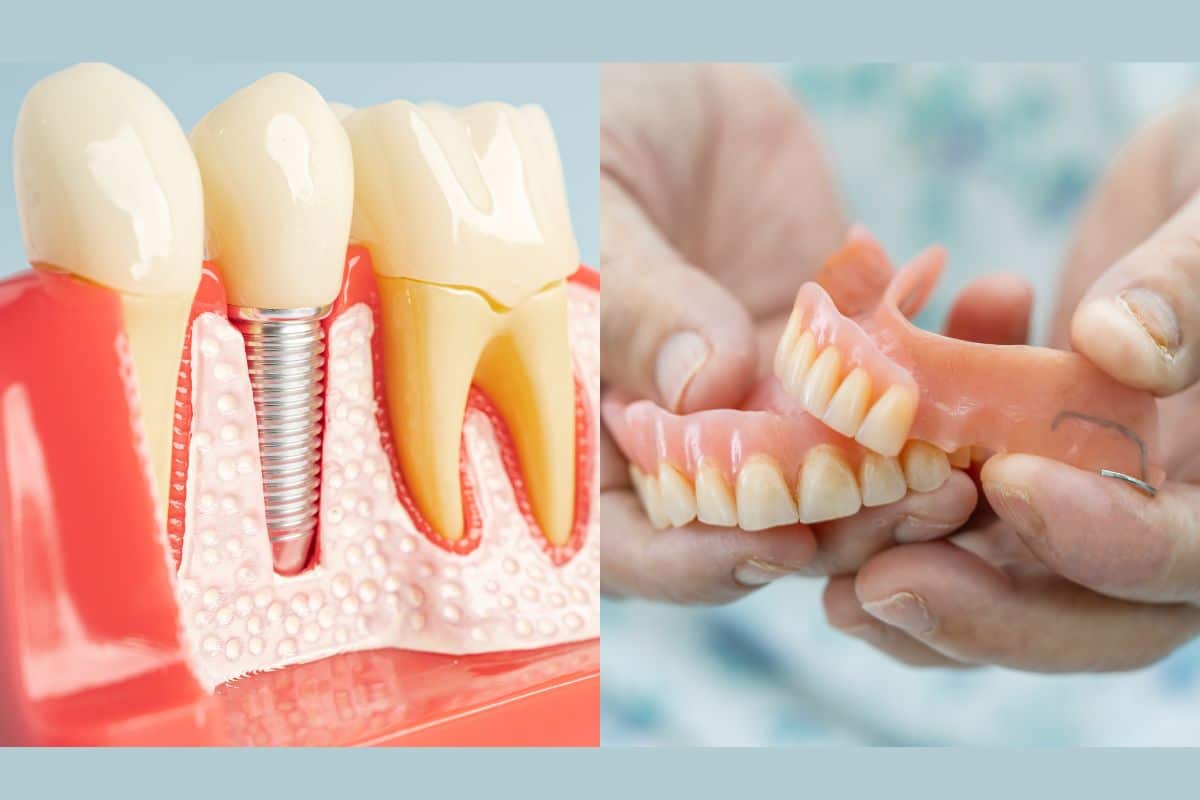
Dental implants are fixed tooth replacements anchored in the jawbone, while traditional dentures are removable prosthetic teeth that rest on the gums.
This fundamental difference affects how each option feels, functions, is maintained, and interacts with the jawbone.
Dental implants
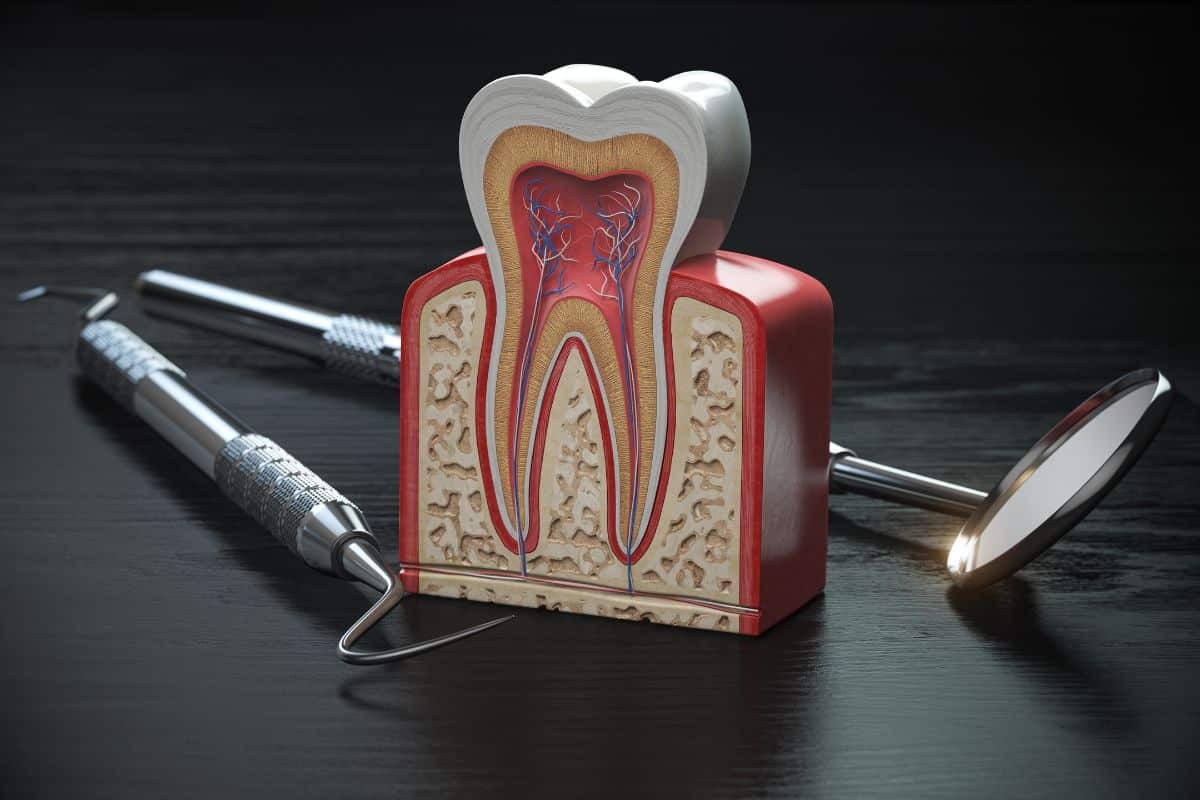
A dental implant consists of an implant post placed in the jawbone, an abutment, and a restoration such as a crown. The implant becomes integrated with the surrounding bone through a process called osseointegration.
Implants can be used to replace:
- One missing tooth
- Several missing teeth
- Multiple teeth with an implant-supported bridge
- An entire arch with an implant-supported restoration
Because implants are anchored in the jawbone, they do not need to be removed for routine daily activities.
Dentures
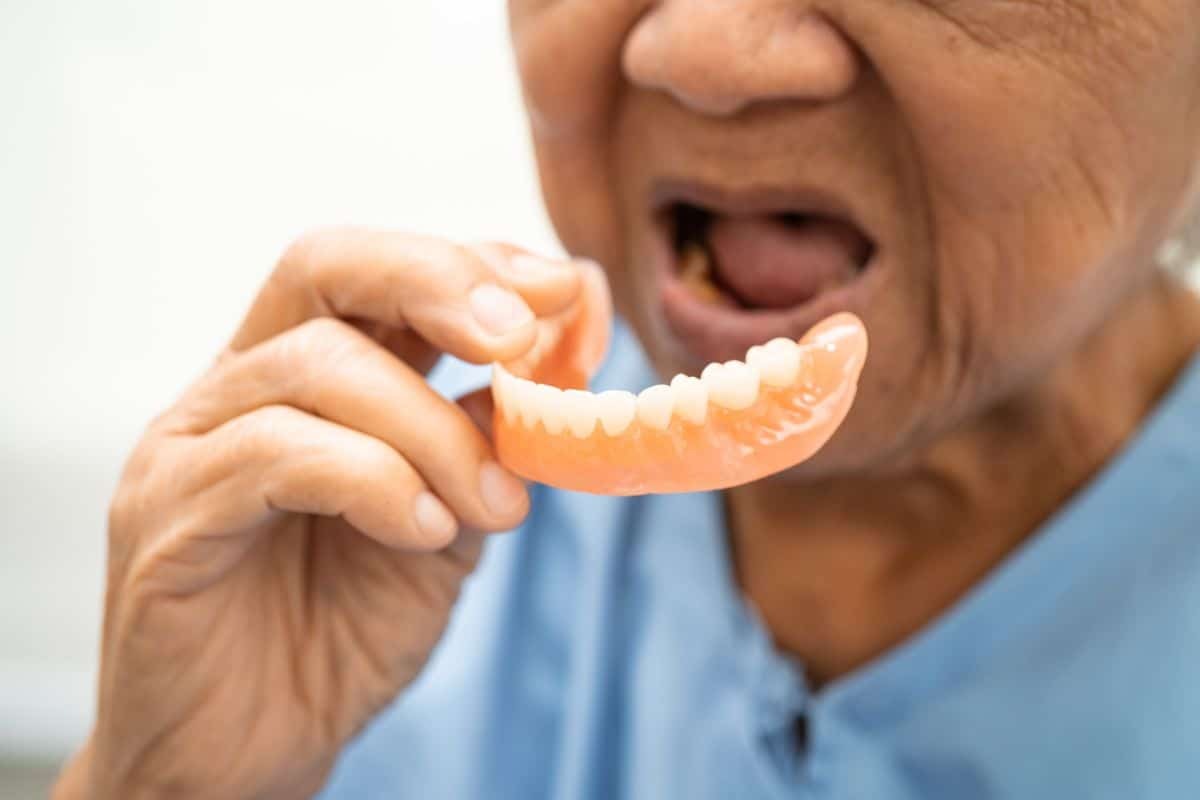
Dentures are removable dental prostheses designed to replace missing teeth and surrounding oral structures. Depending on how many teeth are missing, you may receive:
- Complete dentures for an entire upper or lower arch
- Partial dentures when some natural teeth remain
- Implant-supported dentures that use dental implants for additional retention and stability
Traditional dentures can restore the appearance of the smile and help with chewing and speaking without requiring implant surgery.
Dental Implants vs. Dentures: Side-by-Side Comparison
The right choice depends on several factors rather than one single advantage.
| Factor | Dental Implants | Traditional Dentures |
|---|---|---|
| Stability | Fixed in the jawbone | Removable |
| Tooth replacement | Can replace one or multiple teeth | Usually replaces several or all missing teeth |
| Jawbone support | Implant posts stimulate the surrounding bone | Does not replace the function of a natural tooth root |
| Surgery | Requires surgical implant placement | Usually does not require implant surgery |
| Daily removal | Not required | Required for cleaning and typically overnight |
| Adjustment period | May require healing and integration | May require an adjustment period for fit and comfort |
| Maintenance | Brushing, flossing, and professional dental care | Daily denture cleaning and oral care |
| Initial investment | Generally higher | Generally lower |
| Long-term planning | Designed as a durable tooth-replacement solution | May require relining or replacement as the mouth changes |
The ADA notes that factors such as the number of teeth being replaced, bone loss, cost, and individual needs and preferences can influence denture treatment decisions.
Why Choose Dental Implants for Missing Teeth?
Dental implants are designed to replace both the visible portion of a tooth and its root structure.
1. Implants provide a stable foundation
Because an implant is anchored in the jawbone, it can provide a stable foundation for a dental crown, bridge, or implant-supported denture.
This can make everyday activities such as eating and speaking feel more secure compared with a removable restoration.
2. Implants help support the jawbone
Natural tooth roots stimulate the surrounding jawbone. After tooth loss, the bone in that area can gradually change.
Dental implants are placed within the jawbone and can provide stimulation that traditional removable dentures do not.
This is one reason implant treatment is often considered when long-term preservation of the supporting jaw structure is an important treatment goal. NIDCR describes dental implants as artificial tooth roots that can support crowns and implant-supported prostheses.
3. Implants do not need to be removed
Once treatment is complete, dental implants remain in place. You care for the restoration as part of your regular oral hygiene routine.
There is no need to remove an implant-supported crown each night.
4. Implants can replace different numbers of teeth
Dental implants are not limited to replacing a single tooth.
Depending on your needs, treatment may involve:
- A single-tooth implant
- Multiple dental implants
- An implant-supported bridge
- An implant-supported denture
- A full-arch implant restoration
This makes implants a flexible option for different patterns of tooth loss.
Why Choose Dentures for Missing Teeth?
Dentures remain an important tooth-replacement option, particularly for patients who need to replace multiple or all missing teeth.
1. Dentures can replace multiple teeth at once
A complete denture can replace an entire upper or lower arch, while a partial denture can replace several missing teeth when some natural teeth remain.
2. Dentures do not require implant surgery
Traditional dentures are removable and do not require placement of an implant into the jawbone.
For patients who are not ready for implant surgery or who prefer a removable restoration, dentures may be considered as part of the treatment discussion.
3. Dentures can be more accessible initially
Traditional dentures generally have a lower initial treatment cost than implant treatment.
However, cost should be considered alongside fit, maintenance, potential future adjustments, replacement needs, and long-term treatment goals.
4. Dentures can restore appearance and function
A well-designed denture can replace missing teeth, support the appearance of the smile, and help restore chewing and speech.
Modern dentures can also be customized to fit the patient’s mouth and create a natural-looking appearance.
What About Implant-Supported Dentures?
Dental implants and dentures are not always competing treatments.
In some cases, they can be combined.
An implant-supported denture uses dental implants to help stabilize a removable denture. Instead of relying entirely on the gums for support, the denture connects to implants placed in the jaw.
This approach can provide more retention than a conventional removable denture while still allowing the prosthesis to be removed for cleaning.
The ADA recognizes implant-retained dentures as a type of denture treatment, and NIDCR reports evidence that implant-retained mandibular dentures can provide improved patient satisfaction and oral health-related quality of life compared with conventional complete dentures in some circumstances.
For some patients, the decision may therefore be less about implants or dentures and more about whether an implant-supported denture is appropriate.
Which Is Better for One Missing Tooth?
For a single missing tooth, a dental implant with a crown is one option that can replace the missing tooth without relying on neighboring teeth for support.
A partial denture is another possibility, depending on the location of the missing tooth, the condition of the surrounding teeth, and your treatment preferences.
The choice should be based on an examination of your teeth, gums, bite, and jawbone.
Which Is Better for Multiple Missing Teeth?
When several teeth are missing, the available options become broader.
Depending on the condition of the remaining teeth, treatment may include:
- Multiple dental implants
- An implant-supported bridge
- A partial denture
- An implant-supported partial or full-arch restoration
- A conventional complete denture when most or all teeth are missing
The number and location of missing teeth are important because they influence how the replacement teeth can be supported.
Which Is Better for All Missing Teeth?
When all teeth are missing from an upper or lower arch, complete dentures and implant-supported restorations are common treatment considerations.
Traditional complete dentures are removable and rest on the gums.
Implant-supported dentures use implants for additional retention, while a fixed full-arch implant restoration may provide a non-removable option depending on the patient’s treatment plan.
The best approach depends on factors such as bone volume, gum health, medical history, treatment goals, maintenance preferences, and finances.
Dental Implants vs. Dentures: What About Jawbone Loss?
Jawbone health is one of the major differences between traditional dentures and dental implants.
After a tooth is lost, the jawbone no longer receives stimulation from that tooth’s root. Over time, changes in the bone can affect the shape and support of the area.
Dental implants are designed to function as artificial tooth roots and integrate with the surrounding bone.
Traditional dentures sit over the gums and do not provide the same type of root-level stimulation.
This does not mean that dentures are inappropriate. Dentures remain a practical solution for many patients. It simply means that bone preservation is an important factor to discuss when comparing the two treatments.
Are Dental Implants More Comfortable Than Dentures?
Comfort depends on the individual and the type of restoration.
A properly fitted denture can be comfortable, but it may take time to adjust to wearing and speaking with a removable appliance. Dentures can also become less stable as the shape of the gums and underlying tissues changes.
Dental implants are anchored in the jawbone, which can provide greater stability.
However, implant treatment involves surgery and a healing period. The temporary discomfort associated with treatment should also be considered when comparing the two options.
What About Cleaning and Maintenance?
Both options require consistent care.
Dental implant maintenance
Implant-supported restorations should be cleaned regularly, just like natural teeth. Depending on the restoration, cleaning between the implant and surrounding tissues may require specialized floss, interdental brushes, or other tools recommended by your dental team.
Regular dental visits are also important for monitoring the implant, restoration, gums, and surrounding bone.
Denture maintenance
Dentures should be removed and cleaned regularly.
The American Dental Association recommends daily denture cleaning to remove food particles, plaque, stains, and other deposits. Dentures should also be handled and stored properly when they are not being worn.
A denture that becomes loose or uncomfortable may require professional adjustment, relining, or replacement rather than simply increasing the amount of adhesive used.
Are Dental Implants Right for Everyone?
No. Dental implant treatment requires an individual evaluation.
Important factors can include:
- Available jawbone
- Gum health
- Oral hygiene
- Number and location of missing teeth
- Existing dental conditions
- Medical history and medications
- Healing capacity
- Smoking or tobacco use
- Treatment goals
- Ability to maintain the restoration
Are Dentures Right for Everyone?
Dentures can be appropriate for many patients, but they also require an evaluation.
The condition of the gums, remaining teeth, jawbone, bite, and oral tissues can all affect the design and fit of a denture.
A partial denture also needs to work with the remaining natural teeth.
If an existing denture feels loose, causes persistent irritation, or no longer fits properly, it may need professional evaluation rather than simply continued use.
Dental Implants vs. Dentures: Which Should You Choose?
There is no single tooth-replacement option that is right for every patient.
Dental implants may be considered when stability, fixed tooth replacement, and preservation of jawbone structure are important treatment goals.
Dentures may be considered when a removable solution is preferred, multiple or all teeth need to be replaced, or implant surgery is not appropriate or desired.
Implant-supported dentures may provide another option when a patient wants the removability of a denture with additional implant-based support.
The decision should be based on your oral health, bone support, number of missing teeth, treatment preferences, timeline, maintenance expectations, and financial considerations.
What Happens During a Tooth Replacement Consultation?
Before recommending dental implants or dentures, a dental professional will evaluate the condition of your mouth and discuss your treatment goals.
Your evaluation may include:
- Examination of your remaining teeth
- Evaluation of your gums
- Assessment of your bite
- Review of your medical and dental history
- Dental X-rays or other imaging when appropriate
- Evaluation of available bone support
- Discussion of treatment preferences and expectations
This information helps determine which tooth-replacement options may be appropriate for your individual situation.
If you are considering dental implants, visit our dental practice in Sun City West to discuss your missing teeth and explore your tooth-replacement options with our dental team.
The Bottom Line
Dental implants and dentures can both replace missing teeth, but they work in different ways.
Dental implants are fixed into the jawbone and can provide a stable foundation for crowns, bridges, or implant-supported dentures.
Traditional dentures are removable prostheses that can replace multiple or all missing teeth without implant surgery.
The better option depends on your individual needs rather than a one-size-fits-all answer.
If you are considering dental implants in Sun City West, our team can evaluate your oral health, discuss your available tooth-replacement options, and explain what may be appropriate for your smile.
Contact us today or schedule your appointment with Sunridge Dental Care to get started.
Frequently Asked Questions
Are dental implants better than dentures?
Dental implants and dentures serve different purposes. Implants provide a fixed, root-like foundation, while traditional dentures are removable. The appropriate option depends on your oral health, bone support, number of missing teeth, preferences, and treatment goals.
Can I get dental implants instead of dentures?
In many cases, dental implants can be considered as an alternative to conventional dentures. Some patients may also benefit from implant-supported dentures rather than a fully fixed implant restoration.
Can I get implants if I have been wearing dentures for years?
Possibly. Wearing dentures does not automatically prevent someone from receiving dental implants. However, the amount and condition of available jawbone, gum health, medical history, and other factors must be evaluated.
Do dentures cause bone loss?
Traditional dentures do not provide the same root-level stimulation as natural teeth or dental implants. Changes in the jawbone can occur after tooth loss and over time, which may affect denture fit.
Are implant-supported dentures removable?
Yes. Depending on the treatment design, an implant-supported denture can be removable while using implants to improve retention and stability.
How many teeth can dental implants replace?
Dental implants can be used to replace a single tooth, several missing teeth, or an entire arch. The number of implants required depends on the treatment plan and the type of restoration being used.
How long do dentures last?
The lifespan of a denture varies based on fit, wear, oral changes, and maintenance. Dentures may eventually need adjustment, relining, or replacement as the mouth changes.
What is the first step if I am missing teeth?
The first step is a comprehensive dental evaluation. Your dentist can assess your remaining teeth, gums, bite, and jawbone and explain which tooth-replacement options may be appropriate for you.