When considering tooth replacement options, many patients ask us a crucial question: “Can I still get dental implants if I have already experienced jawbone loss?” The short answer is a resounding yes. While natural bone density is important for supporting an implant, modern restorative techniques mean that having bone depletion no longer disqualifies you from regaining a full, healthy smile.
At Sunridge Dental Care, our experienced practitioners, Dr. Amy Okun, Dr. Cynthia Colson, and Dr. William F. Gioia, specialize in advanced restorative techniques that allow patients with varying degrees of bone loss to safely and predictably receive dental implants in Sun City West.
In this comprehensive guide, you will get to learn why bone loss occurs, how it affects your oral health, and the proven clinical solutions we use to rebuild foundation strength for a lifelong smile.
Understanding Jawbone Loss: Why Does It Happen?
To understand how implants work alongside bone loss, it helps to understand how the jawbone maintains its structure. Your jawbone relies on constant stimulation from natural tooth roots. Every time you chew, bite, or speak, forces travel down through the root into the surrounding bone tissue, signaling the body to continuously regenerate bone cells.
When a tooth is lost or extracted, that essential stimulation vanishes. Over time, the body begins to reabsorb the unused bone tissue in a natural process called resorption.
Common Causes of Bone Loss
Beyond tooth loss, several factors contribute to bone deterioration in the jaw:
- Advanced Periodontal Disease (Gum Disease): Bacterial infections destroy the surrounding gum tissue and degrade the underlying alveolar bone holding your teeth in place.
- Long-Term Removable Denture Use: Traditional dentures sit on top of the gums rather than integrating into the bone. Because they do not stimulate the jawbone, natural bone loss continues underneath them.
- Facial Trauma or Injury: Fractures or severe impact can damage the jawbone and blood supply, leading to localized tissue loss.
- Osteoporosis & Systemic Health Factors: Age-related systemic conditions can lower overall bone mineral density throughout the body, including the maxilla (upper jaw) and mandible (lower jaw).
Why Bone Density Matters for the Implant Treatment
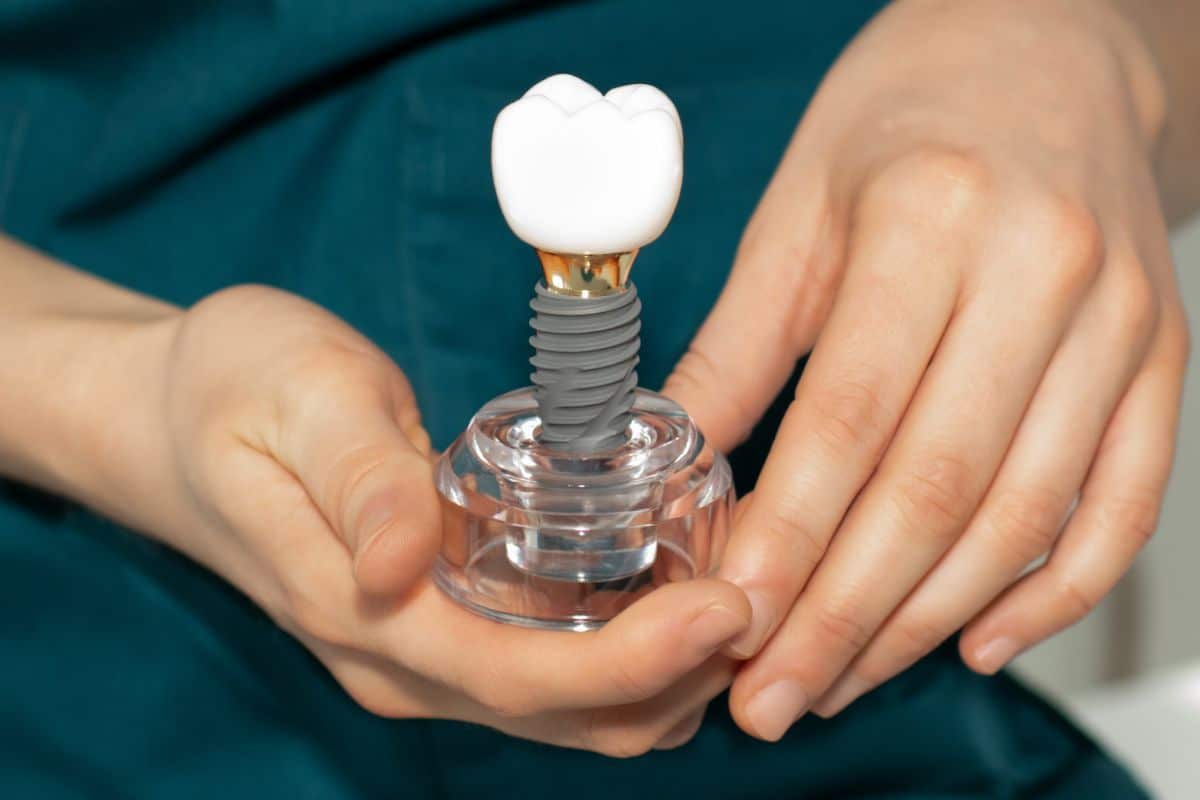
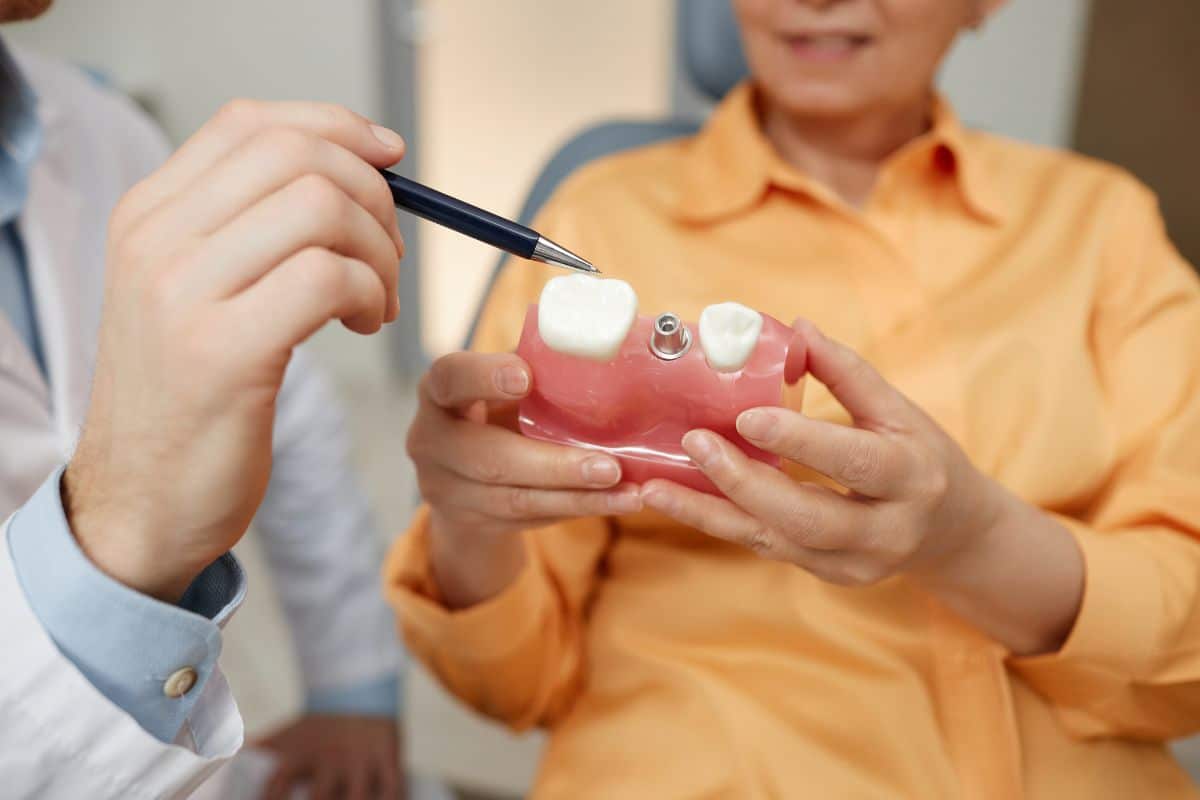
It is composed of a biocompatible titanium screw that acts as an artificial tooth root. For an implant to succeed, a biological process called osseointegration must occur. During osseointegration, your natural jawbone fuses directly to the titanium surface, providing a firm foundation for a crown, bridge, or fixed denture.
If there is insufficient bone height, width, or density, the titanium post may not achieve full stability. Without intervention, an implant placed in weak bone faces an increased risk of failure or nerve damage. However, having thin or compromised bone does not mean you have to give up on getting permanent, lifelike teeth.
How We Restore Missing Bone: Bone Grafting Solutions
When patients seek dental implants in Sun City West but lack sufficient jawbone tissue, bone grafting is often the primary key to success. A bone graft acts as a structural scaffold, encouraging your body to deposit new, natural bone material right where it is needed most.
Depending on your specific anatomy and the site of missing teeth, we utilize several effective bone augmentation procedures:
Ridge Preservation (Socket Grafting)
Performed immediately after a tooth extraction, a ridge preservation graft fills the empty socket with bone material. This prevents the immediate collapse of surrounding bone tissue and prepares the site for future implant placement.
Major Block & Guided Bone Regeneration (GBR)
When significant time has passed since a tooth was lost, the alveolar ridge can become narrow or short. Guided bone regeneration uses specialized graft materials covered by a protective membrane to rebuild width and height in targeted areas.
Sinus Augmentation (Sinus Lift)
The upper back jaw presents a unique anatomical challenge. The sinus cavities lie directly above your upper molars. When those teeth are lost, the sinus floor drops down while the underlying bone shrinks. A sinus lift gently elevates the sinus membrane and inserts graft material underneath, creating the necessary height to support upper implants safely.
What to Expect During Your Implant Journey
Restoring your smile with dental implants in Sun City West is a structured, highly personalized process designed to ensure safety and long-term durability.
Step 1: Comprehensive Consultation
We begin with a detailed examination using advanced imaging. This technology allows us to evaluate your exact bone volume, density, and anatomical structures in three dimensions.
Step 2: Site Preparation & Bone Grafting
If bone grafting is necessary, it is performed in-office using localized anesthesia to ensure complete comfort. Healing times vary, but graft integration generally takes 3 to 6 months to establish a dense foundation.
Step 3: Precise Implant Placement
Once bone density is verified, the titanium implant post is surgically anchored. Over the next few months, osseointegration secures the post to your newly strengthened jawbone.
Step 4: Final Restoration Attachment
After fusion is complete, a custom-crafted porcelain crown, bridge, or implant-supported denture is fixed to the post, restoring full chewing function and a natural appearance.
Tips to Care for Your Implants
Proper home care and routine checkups are vital to protect your new investment. Although implant restorations cannot decay like natural enamel, the supporting gums and bone can still suffer from a condition called peri-implantitis if oral hygiene slips.
To maintain optimal health:
- Brush twice daily using a low-abrasive toothpaste and a soft-bristled toothbrush.
- Floss daily with specialized implant floss or a water flosser.
- Schedule regular professional cleanings and examinations every six months.
When you invest in high-quality dental implants in Sun City West, partnering with an experienced dental team ensures your restored smile remains healthy, strong, and functional for decades to come.
Frequently Asked Questions
1. Can bone loss prevent you from getting dental implants?
Bone loss alone does not disqualify you from getting dental implants. Through advanced treatments like bone grafting, sinus lifts, or angled implant placement, we can build a stable foundation to support implants safely.
2. How long does a bone graft take before an implant can be placed?
Bone graft healing typically takes between three to six months. This allows your natural tissue time to fuse with the graft material, creating a strong, dense base capable of supporting titanium implant posts.
3. Is bone grafting for dental implants a painful procedure?
Bone grafting is performed under local anesthesia to ensure complete comfort during surgery. Post-procedure discomfort is usually mild to moderate and easily managed with prescribed or over-the-counter pain medications for a few days.
4. What happens if you get dental implants without enough bone?
Placing dental implants in insufficient bone height or density increases the risk of early implant failure. The titanium post may fail to integrate properly, leading to mobility, discomfort, or potential nerve damage.
5. Are there implant options that do not require bone grafts?
Yes, options like All-on-4® angled implants or mini implants leverage remaining dense bone structures. These alternatives can often bypass the need for extensive bone grafting while providing stable support for full-arch restorations.
6. Can periodontitis bone loss be reversed for dental implants?
While lost bone does not regrow spontaneously, targeted bone regeneration techniques can rebuild damaged areas. Once gum disease is fully controlled, bone grafting can restore volume to make implant placement possible.
7. How do I know if I have enough bone for dental implants?
A digital scan provides detailed cross-sectional views of your jawbone height and density. During your consultation, we use these precise images to determine your exact bone quality and recommend a tailored treatment plan.
Reclaim Your Smile at Sunridge Dental Care
Bone loss does not have to stand between you and a restored, confident smile. Modern restorative techniques allow us to rebuild lost foundation strength and deliver predictable, beautiful results.
If you are ready to learn more about your options for restoring missing teeth, contact our expert team at Sunridge Dental Care today!